

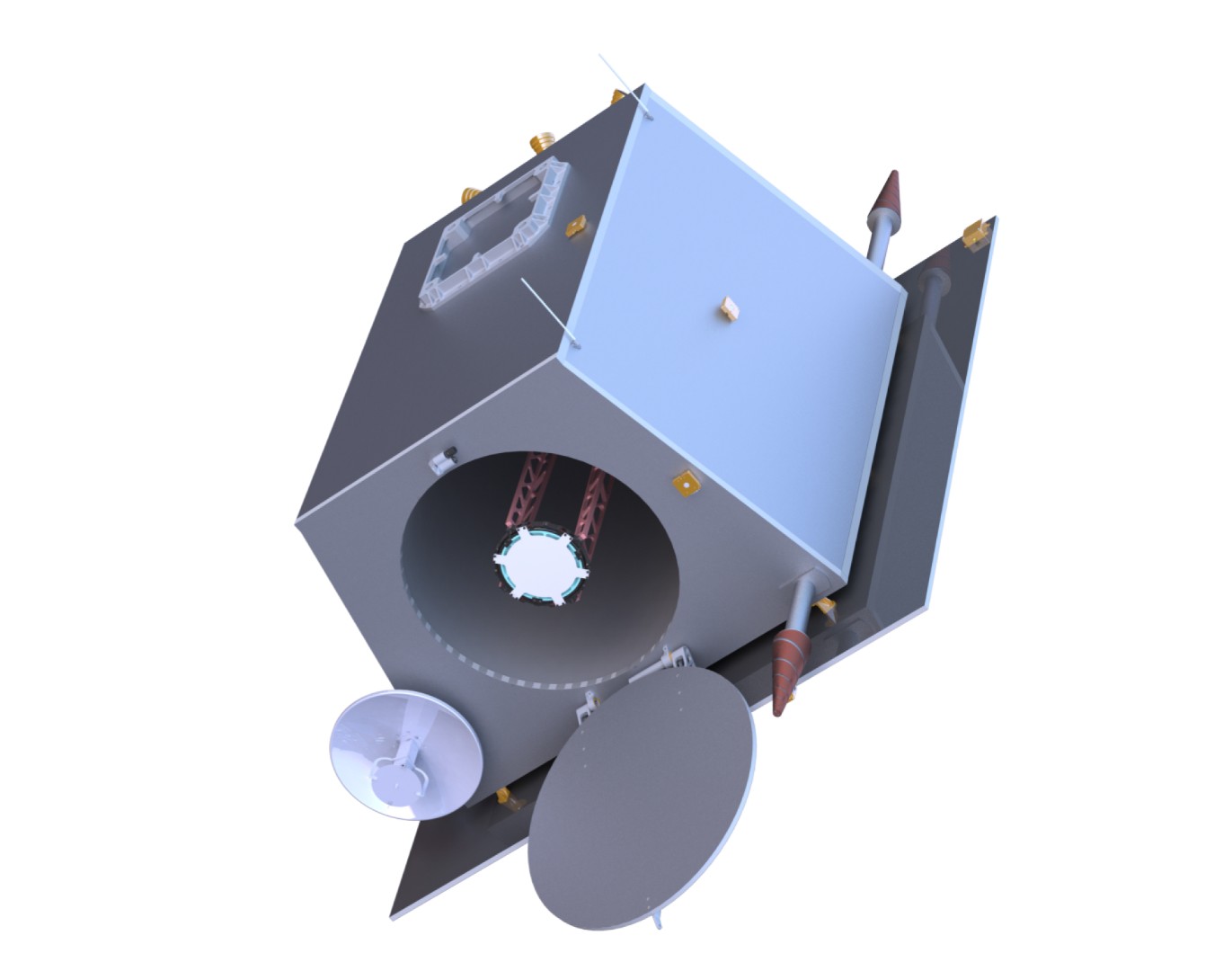

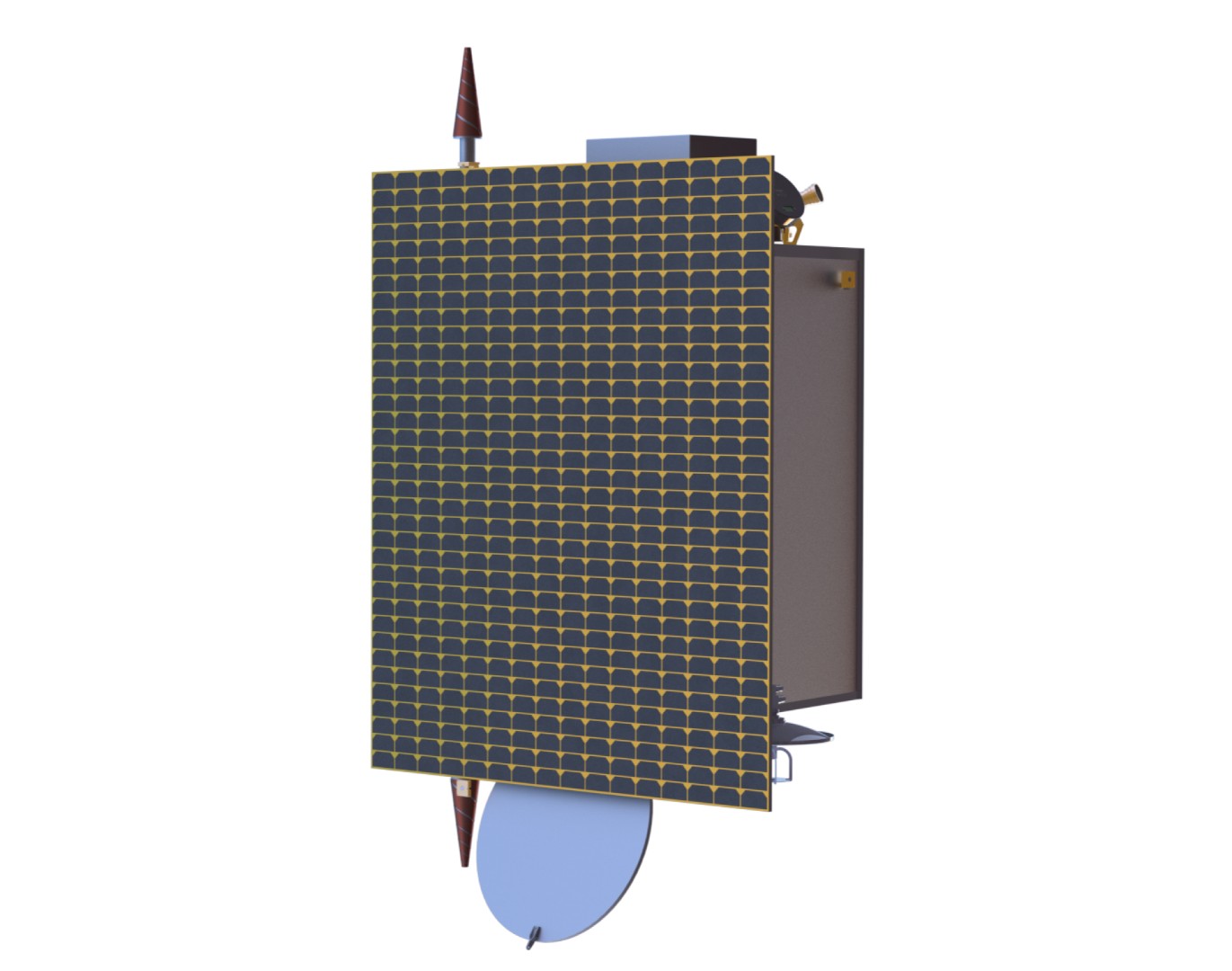


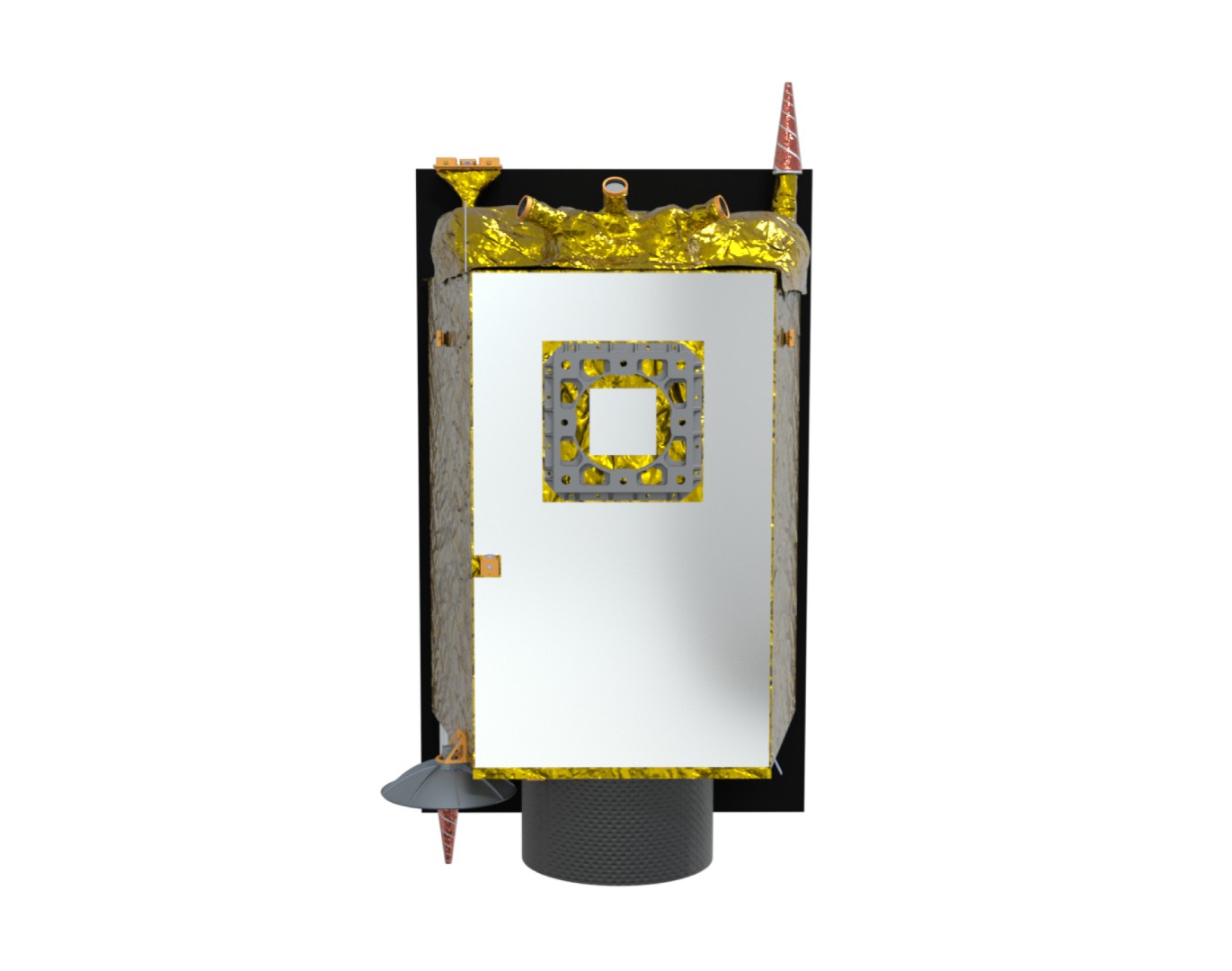
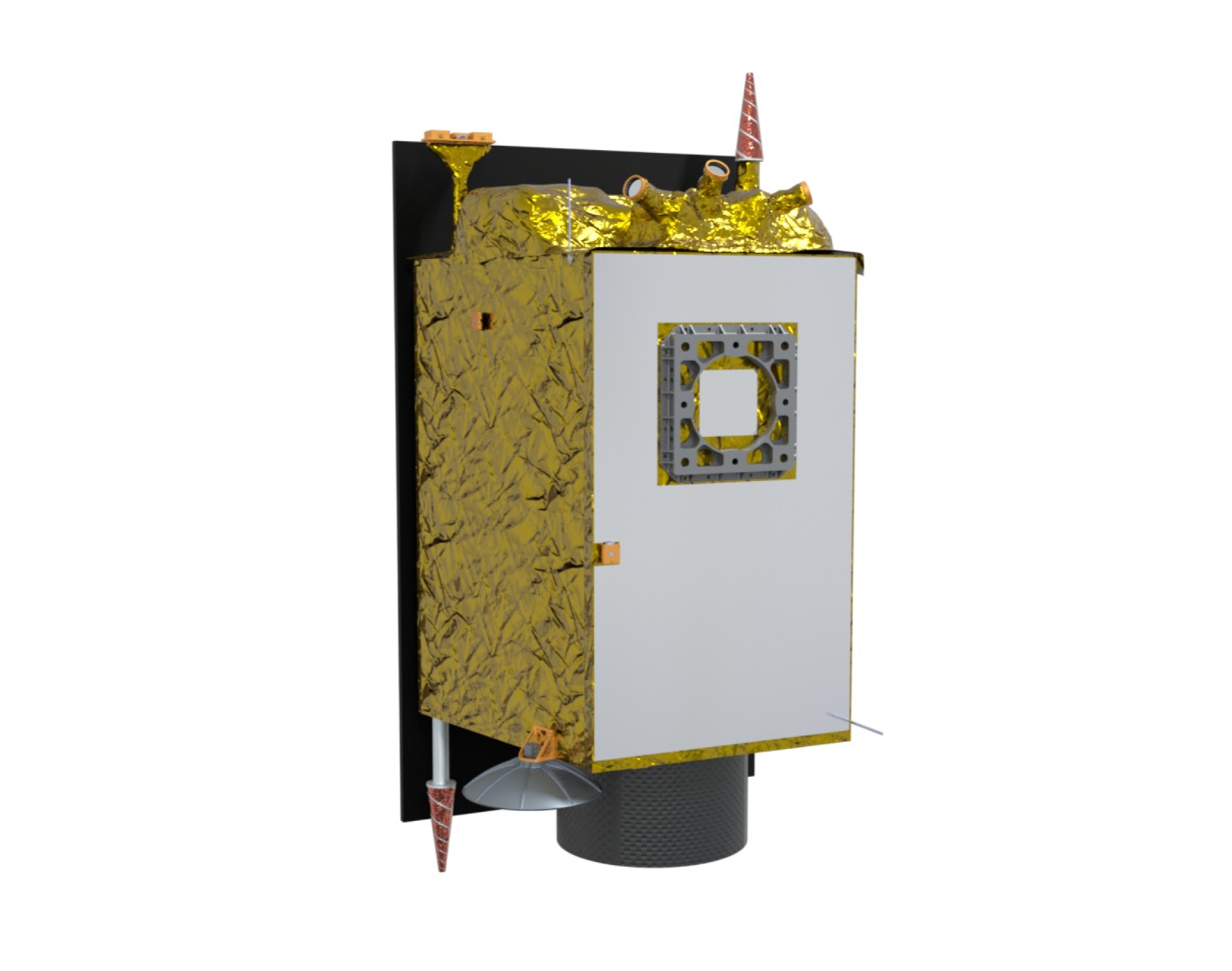
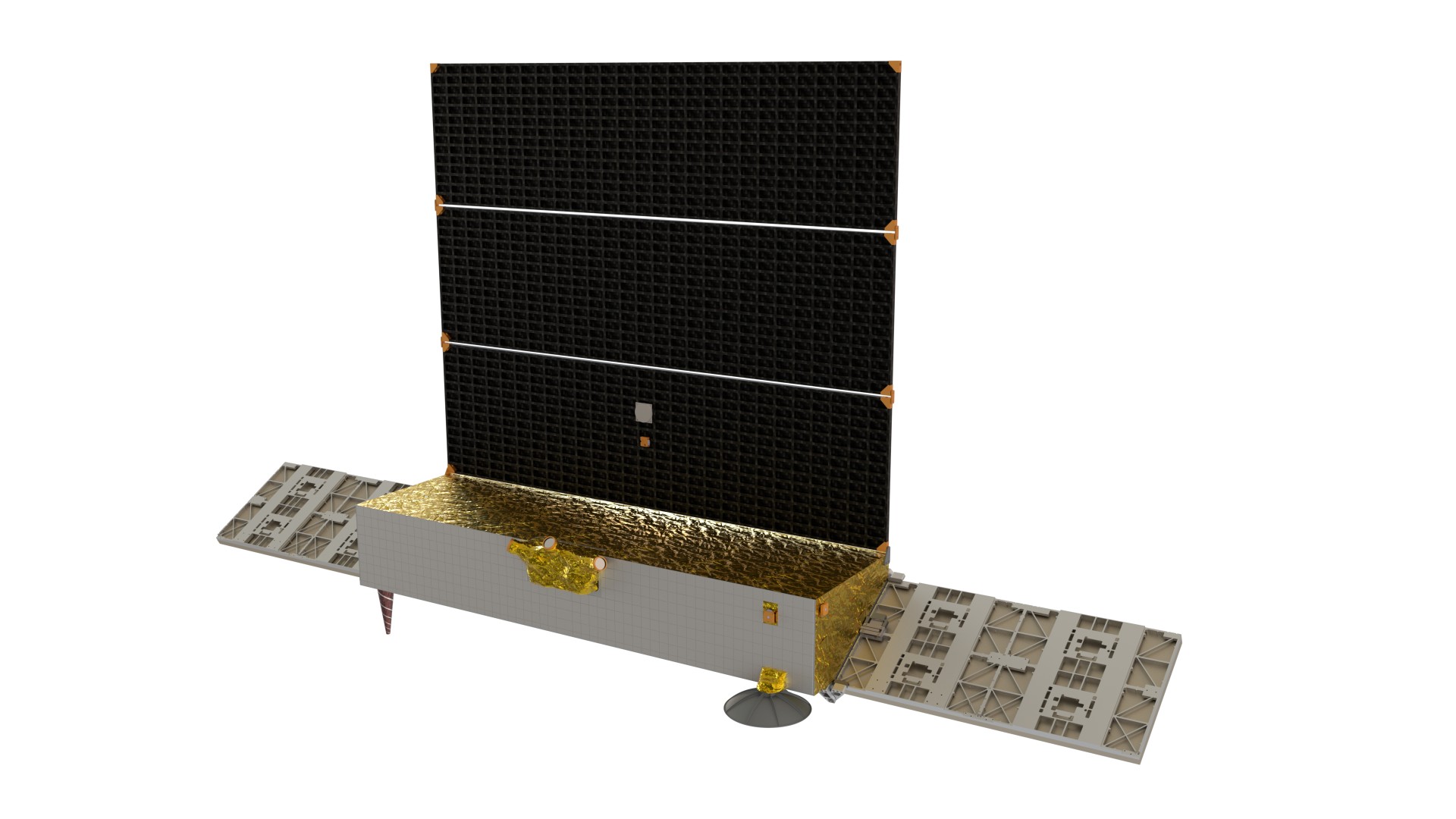
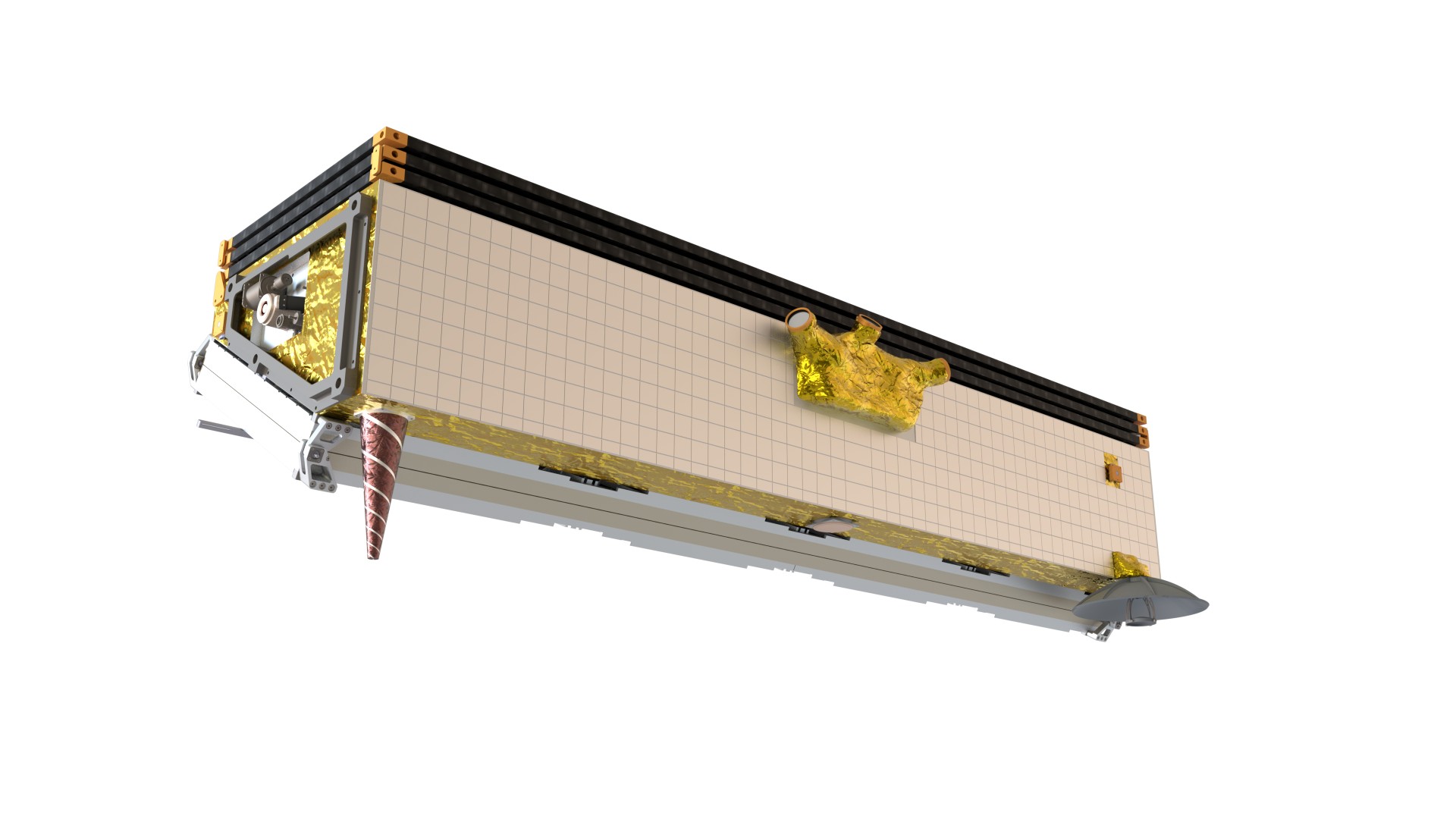
The Pallada space platform, developed by SPUTNIX , is a structural module with a functional set of service systems and ensures the placement and operation of the payload, regardless of the version of the target equipment complex.
The space platform under development is based on a standard set of onboard service equipment created by SPUTNIX.
A spacecraft for a specific task is created by combining of separate service devices and payload into a single construct using standard mechanical, electrical and information interfaces. The onboard equipment composition depends on payload characteristics, the operation sequence, the required reliability and a number of other factors.
The main competitive advantage of the Pallada space platform is that most of the onboard equipment (OE) has its own design by Sputniks LLC. This makes it possible to reduce the time required for the development of the spacecraft associated with purchases and contractors.
The task is to achieve a reduction in the mass and dimensions of the satellite platform while maintaining the functionality of "large" spacecraft - from 600 kg and more, through the development and production of our own unique on-board systems and the unification of information, mechanical and electrical interfaces.
To ensure the functioning of various payloads, the structural-power scheme of the space platform can provide the placement of additional systems and devices:
- propulsion system;
- block of secondary power supplies;
- block of matching information interfaces;
- inter-satellite communication line equipment.
Possible payloads:
- Earth remote sensing (ERS), optical;
- ERS, radar;
- Broadband communications (within constellation);
- M2M data collection and packet transmission (within constellation);
- Equipment for technological experiments;
- Scientific equipment.
SC "Kinosputnik"
In 2024, the launch of the first spacecraft based on this platform is the Kinosputnik high-resolution optical ERS spacecraft. The main characteristics of the spacecraft "Kinosputnik" are presented in the "Characteristics" section. The appearance of the Kinosputnik spacecraft based on the Pallada platform is shown in the video below.
Synthetic aperture radar spacecraft "AtomSat"
On the spacecraft based on the Pallada platform with a radiator, it can install two variants of the SAR payload. The main differences between loads are performance and frequency response. There are two versions of SAR - X-band and C-band. The appearance of the AtomSat spacecraft is shown in the video below.
Both SAR versions are implemented on the basis of an active phased array antenna (APAA) with a digital diagram-formation. APAA includes eight panels. Structurally, they are combined into three sections, a fixed central section and two folding sections. The movable parts are folded in the starting position and are opened by means of electric drives to the nominal position.
Both SAR variants can operate with full polarization basis in all operating modes. A variant of the APAA with two phase centers is possible for the implementation of the operating mode with the selection of moving targets (determination of speed and acceleration).
|
Operation orbit |
|
|
Launch method |
piggyback or target cluster launch |
|
Type of orbits |
LEO, circular |
|
Altitude |
500 – 800 km |
|
Active lifetime |
not less than 3 years |
|
Onboard computing complex |
|
|
Low speed control onboard bus with service systems and payload |
CAN2B in accordance with ISO 11898-2 |
|
High speed data exchange onboard bus with service systems and payload |
SpaceWire in accordance with ECSS-E-ST-50-12С |
|
Onboard information network architecture |
in accordance with Sputnix Plug-and-Play Architecture |
|
Onboard software architecture |
in accordance with ECSS-E-ST-70-41C |
|
Autonomous operation |
up to 7 days |
|
Power supply system |
|
|
PSS construction |
in accordance with Sputnix Plug-and-Play Architecture |
|
Onboard supply voltage |
- 27±2% V |
|
Average PSS capacity |
up to 500 W |
|
Maximum PSS capacity |
up to 1 000 W |
|
Design and composition |
|
|
Pallada-based spacecraft composition |
in accordance with Sputnix Plug-and-Play Architecture |
|
Mass of spacecraft, in total |
80-200 kg |
|
Mass of payload |
up to 100 kg |
|
Devices and systems connection |
in accordance with Sputnix Plug-and-Play Architecture |
|
Temperature control system |
mostly passive |
|
Onboard TM/TC system |
|
|
Frequency range |
2000-2200 MHz (S) |
|
Ground-to-board data rate |
up to 1 Mbps |
|
Board-to-ground data rate |
up to 0.5 Mbps |
|
TM/TC interface |
in accordance with ECSS-E-ST-50С, ECSS-E-ST-70C |
|
Interface with ground payload data receiving complex |
|
|
Frequency range |
8000-8100 MHz (X) |
|
Data rate (*) |
800 ... 1500 Mbps |
|
Data transfer standard |
DVB-S2 |
|
Possible absolute accuracy of ADCS in 3-axis mode relative to inertial coordinate system |
|
|
Orientation determination |
±30'' |
|
Orientation maintenance |
± 0,05° |
|
Angular velocity maintenance |
± 0,001°/с |
|
Navigation parameters vector determination |
± 30 m, ± 0.06 m/s |
(*) is determined by the capabilities of ground receiving stations
The main operational characteristics of the «AtomSat» spacecraft:
|
Orbit of functioning |
|
|
Type of orbits |
LEO |
|
The height of the circular working orbit, km |
600 |
|
Inclination, ° |
97 |
|
Time in the ascent angle (LTAN) |
18:00 |
|
Mass and dimensions |
|
|
Mass , kg |
350 |
|
Dimensions in working position, m |
6 х 3 х 1 |
|
On-board computer system |
|
|
Information interfaces |
CAN2B (1 Мbit/s) SpaceWire (100 Мbit/s) |
|
Storage volume of target information, TB |
1 |
|
Power supply system |
|
|
Square of PSS, m2 |
6 |
|
Average power of the PSS, W |
800 |
|
Peak power consumption of sat, W |
2900 |
|
SB energy intensity, W*h |
3000 |
|
Power bus voltage, V |
27 ( from 25 to 28) from 24 to 33 |
|
Command and telemetry system |
|
|
Frequency range |
S |
|
Channel speed, Mbit/s |
1 |
|
The probability of a bit error in the channel |
10-6 |
|
Possible absolute accuracy of ADCS system |
|
|
Orientation determination, m |
30 |
|
Orientation maintenance, ″ |
not bad than 30 |
|
Angular velocity maintenance, °/с |
± 0,001 |
|
Accuracy of maintaining orientation, ° |
± 0,05 |
|
Onboard TM/TC system |
|
|
Frequency range |
Х |
|
Data rate, Мbit/s |
1500 |
|
The probability of a bit error in the channel |
10-9 |
|
Functioning |
|
|
Active lifetime, years |
5 |
|
Launch method |
Cluster specialized; associated launch. |
|
Performance (in overview mode), km2/day |
4 500 000 |
|
Probability of uptime |
0.9 |
|
Searchlight mode |
|
|
Resolution, m |
2 |
|
Capture band, km |
10 |
|
Field of view, km |
160 |
|
Radiometric sensitivity, dB |
minus 20 |
|
Radiometric resolution, dB |
3,2 |
|
Angles of incidence, ° |
40-50 |
|
Polarization |
V/V, V/G, G/ГG G/V |
|
Overview mode |
|
|
Resolution, m |
100 |
|
Capture band, km |
260 |
|
Field of view, km |
500 |
|
Radiometric sensitivity, dB |
минус 23 |
|
Radiometric resolution, dB |
2 |
|
Angles of incidence, ° |
15-51,5 |
|
Polarization |
V/V + V/G + G/G + G/V |
